OPM 0.10
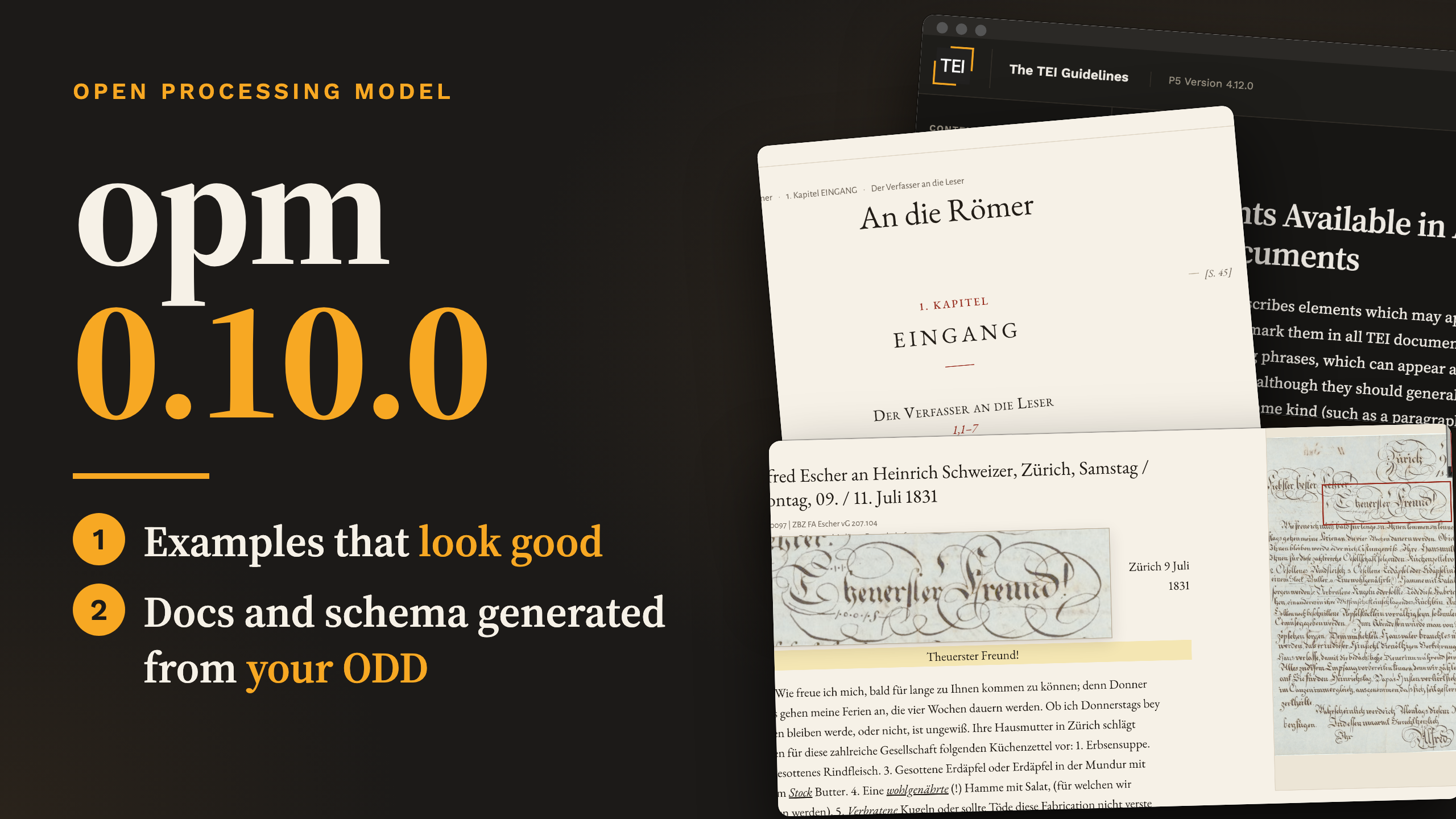
This release focuses on two topics:
- generating project documentation from the ODDs, as a static website, markdown, ePub or PDF
- monograph and correspondence showcases
Examples now include attractively typeset monograph, available in a range of output formats, and a correspondence edition with a view you can switch between diplomatic and edited text. HTML templates and styling have been refactored to better support different designs while sharing the basic layout.
Documenting your ODD
As users of TEI Publisher or OPM, you are surely familiar with the ODD as the place to define processing model transformations. However, its main purpose is to document your entire encoding practice, including the customization of the TEI you are using, from which a formal schema can be compiled. And for sure, writing a documentation is only worth it if someone actually reads it.
OPM 0.10 adds a simple command to generate a static website from any ODD. The result is pleasant to read and navigate through. PDF and other output formats are also supported.
# preview as static website
opm odd document <my.odd> --force --preview
# or in different formats
opm odd document <my.odd> -t typst      # a PDF
opm odd document <my.odd> -t markdown   # a Markdown file
opm odd document <my.odd> -t epub       # an e-book
# without ODD, it renders the latest version of the TEI P5 guidelines
opm odd document --force --preview
If your ODD contains prose, it will be included – otherwise you just get the reference pages. And while we were at it, we also played around with generating a Relax NG schema. Please note that this feature is still experimental:
opm odd compile <my.odd> --format rng -o my.rngThe TEI Guidelines, rendered with OPM, are now available for preview from GitHub pages.
Reworked examples and base layout
The list of examples you can initialize with opm init is getting longer. Fresh arrivals are:
- a monograph example rendering one chapter of Karl Barth's Der Römerbrief. This focuses on using the same typography across different media formats.
- another correspondence sample based on the Alfred Escher Briefedition. Here the focus is on switching between edited text and diplomatic view as well as the interaction with IIIF.
Looking at the growing number of showcases, we refactored the templates they use: examples now share a common base layout which aligns with the concept of layout regions in TEI Publisher 11: concrete templates inherit from base and can fill the named regions known from TEI Publisher, e.g. before, after or content.
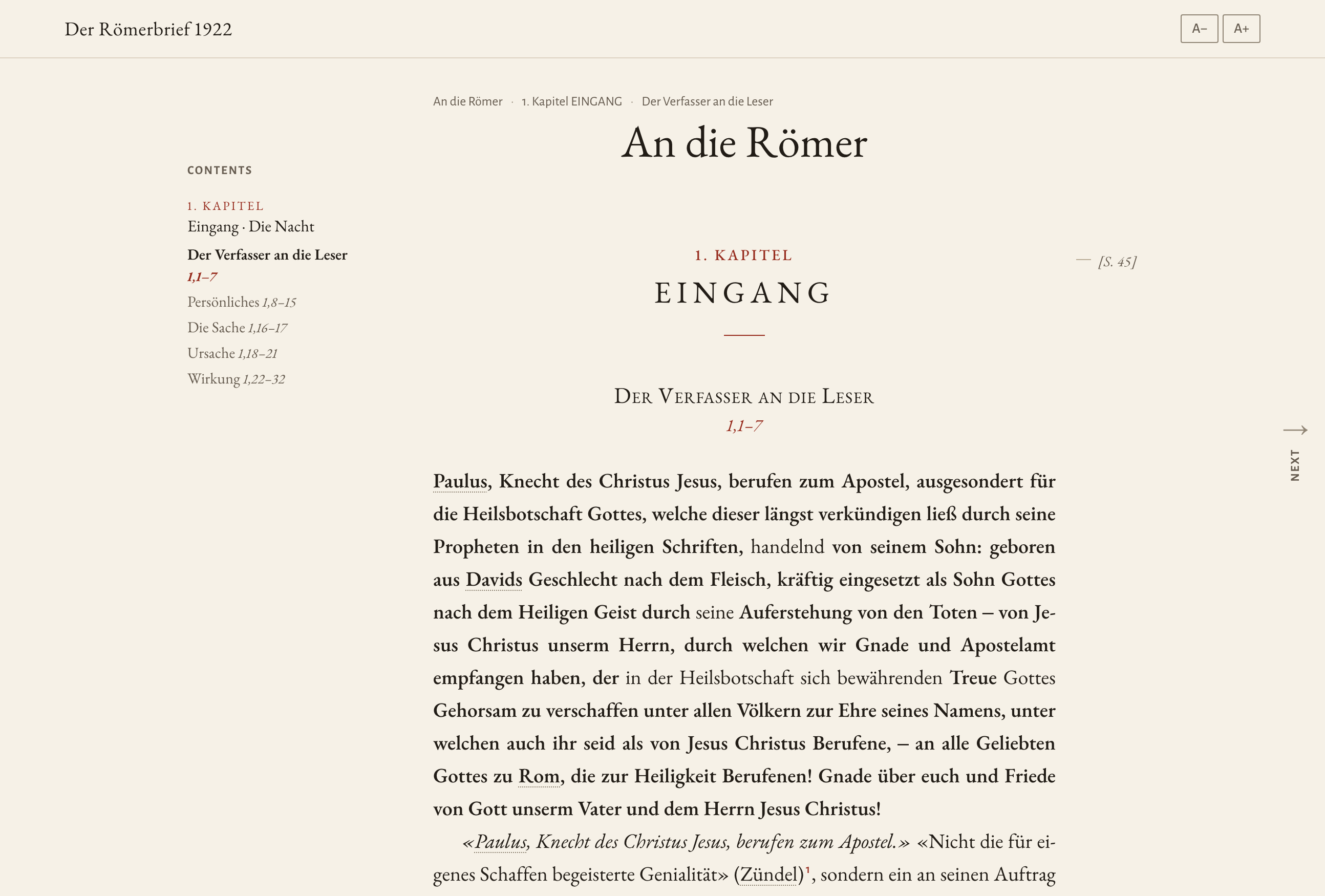
Monograph as a web page
A chapter of Karl Barth's Römerbrief
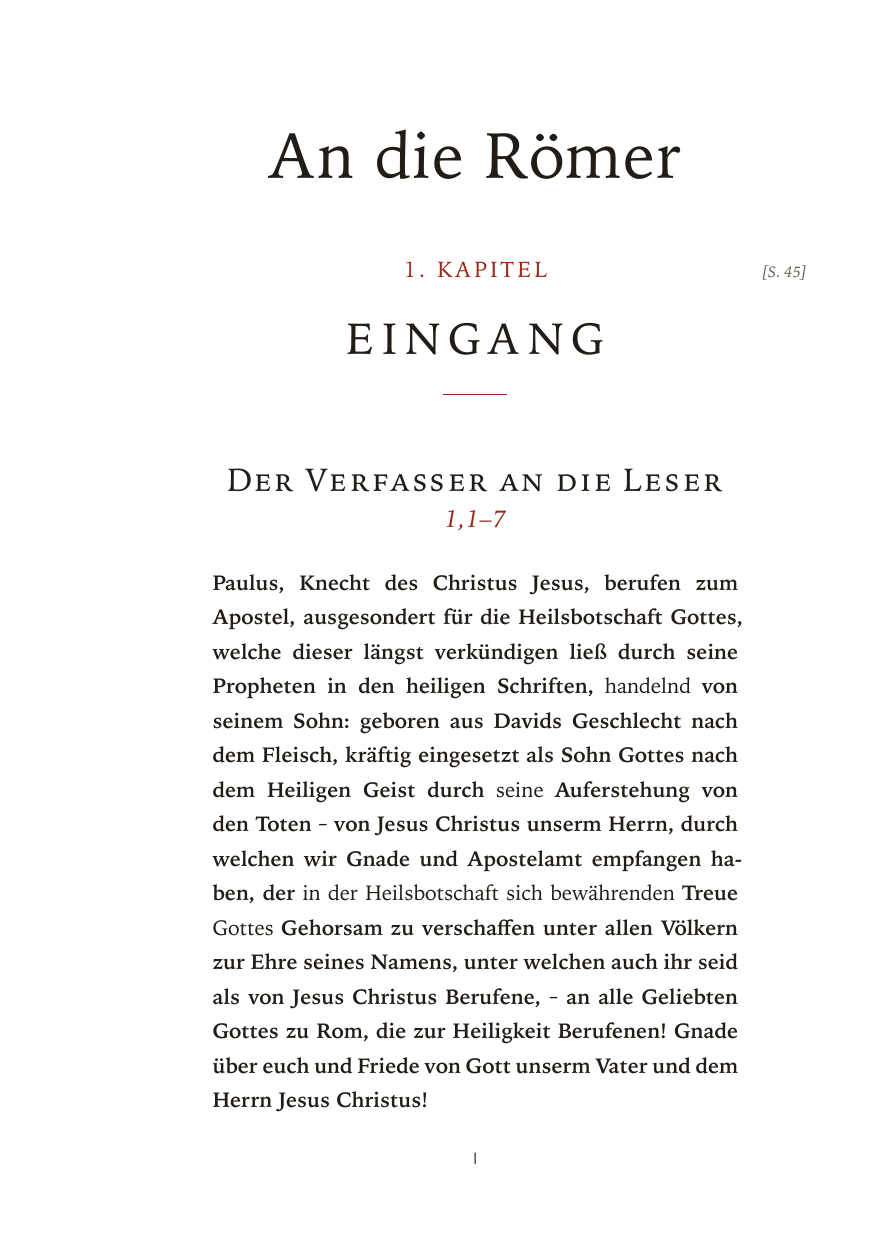
Monograph as PDF
The same chapter of the Römerbrief, ready for print
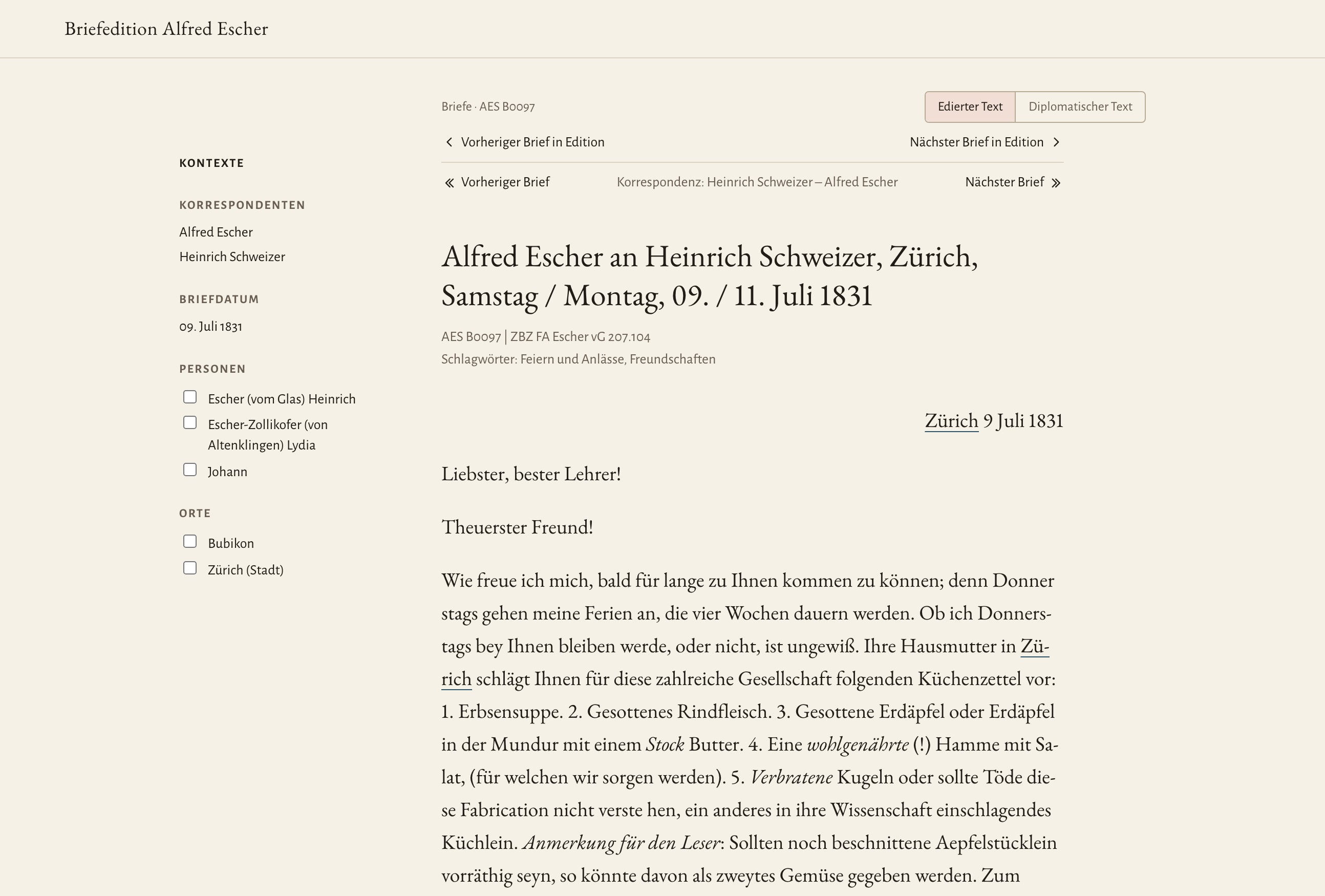
Letter edition: edited text
Briefedition Alfred Escher
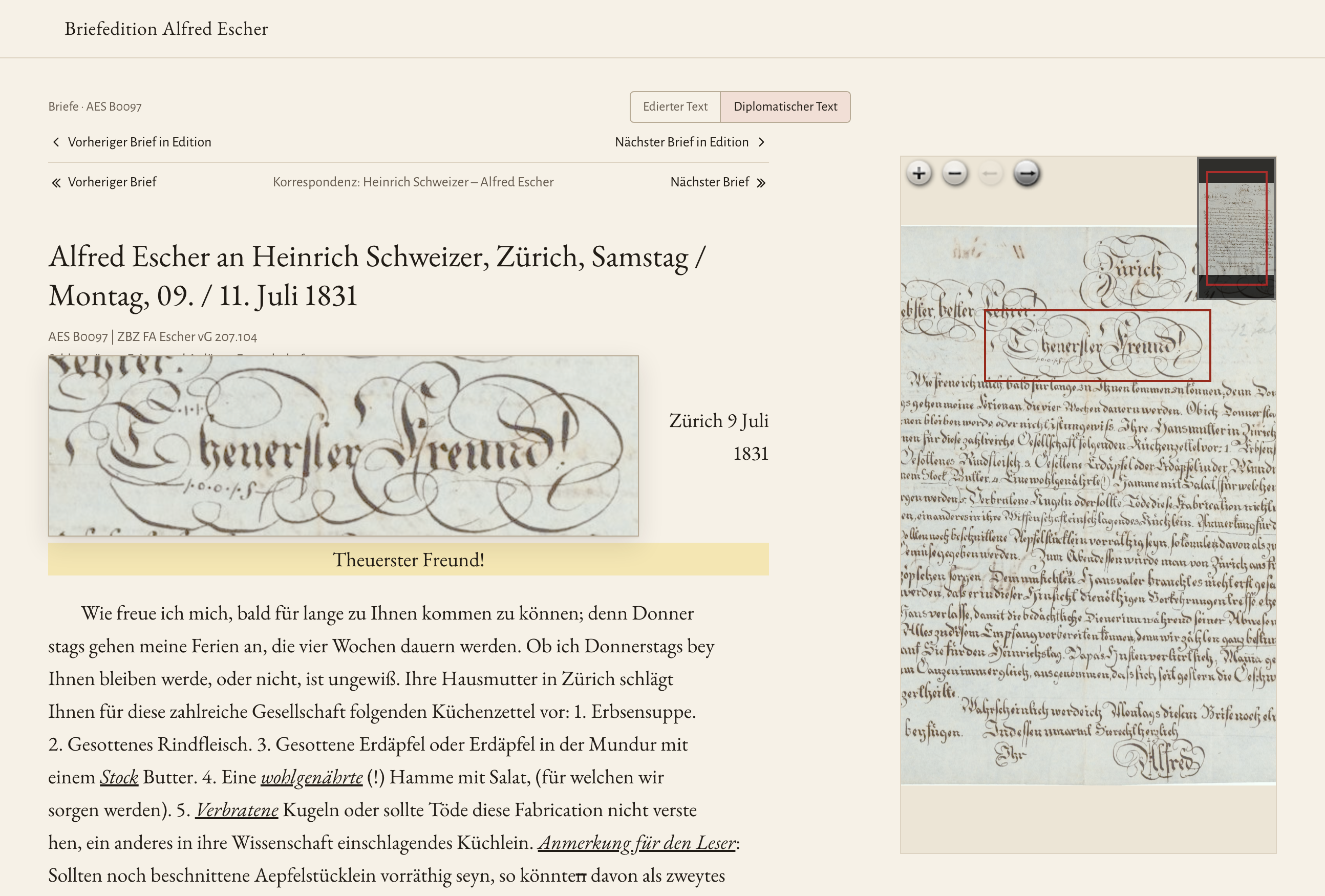
Letter edition: diplomatic text
Hovering over a line shows its region in the facsimile
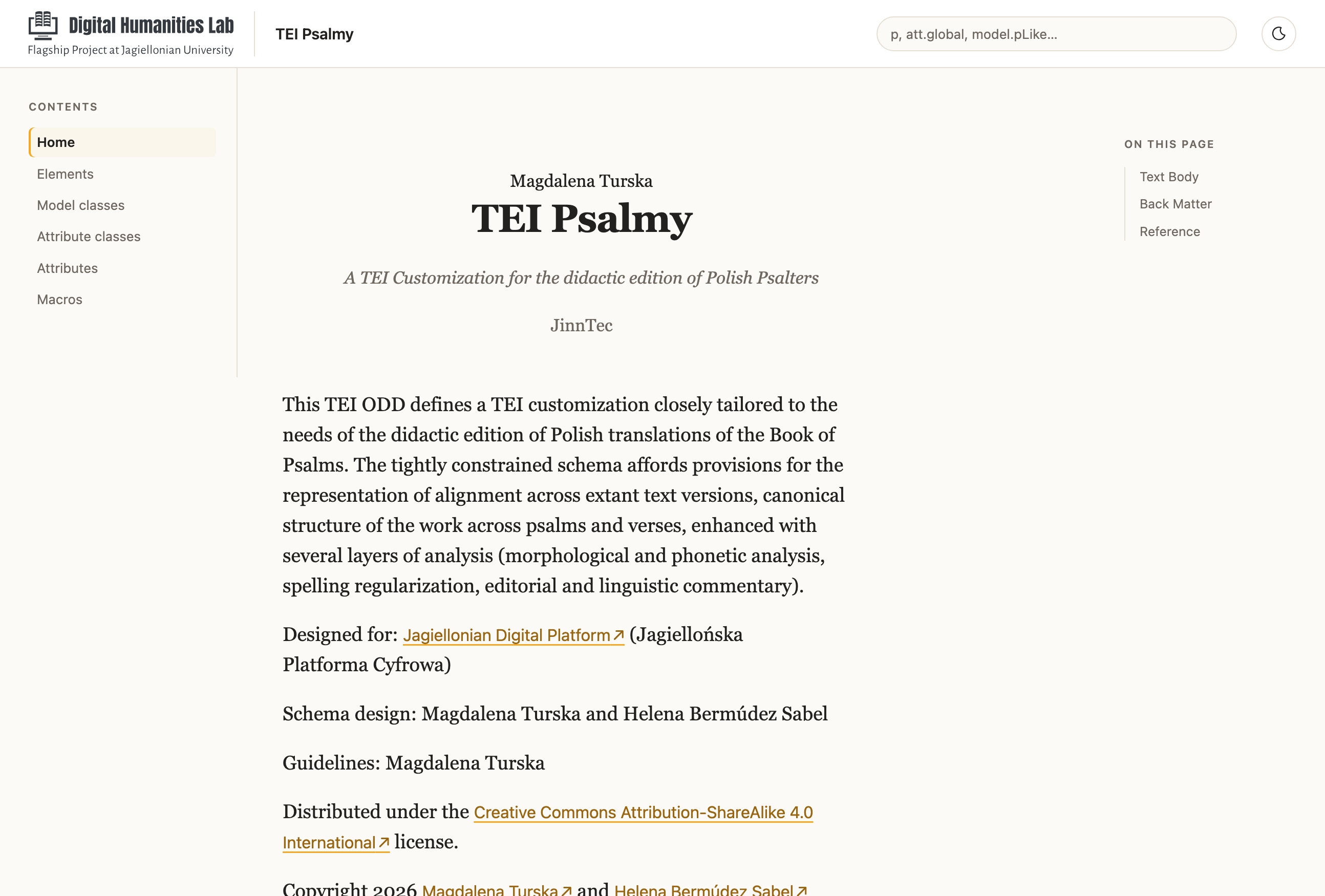
ODD documentation
An ODD rendered as a documentation site
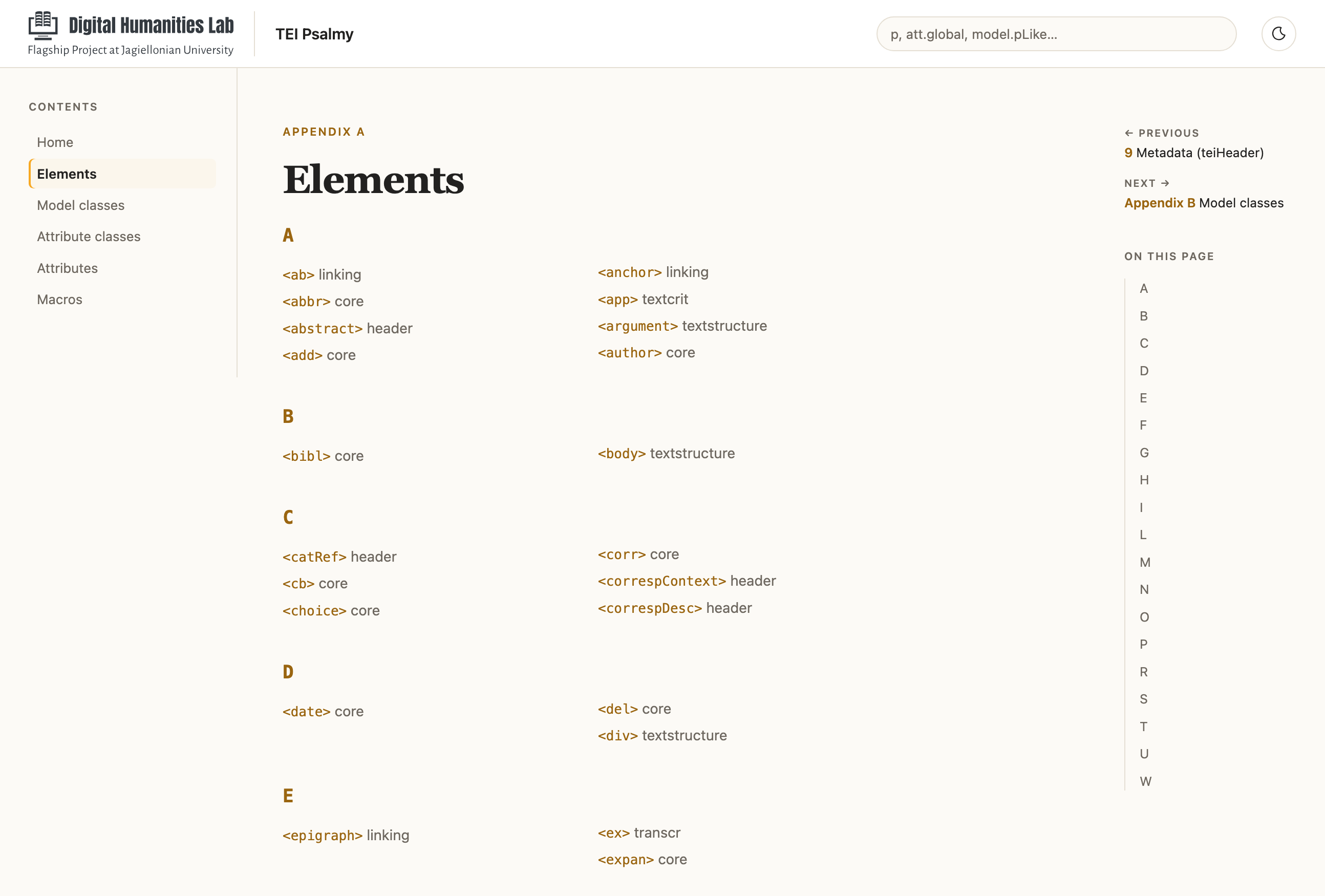
ODD documentation: element index
All elements of the customization, grouped alphabetically
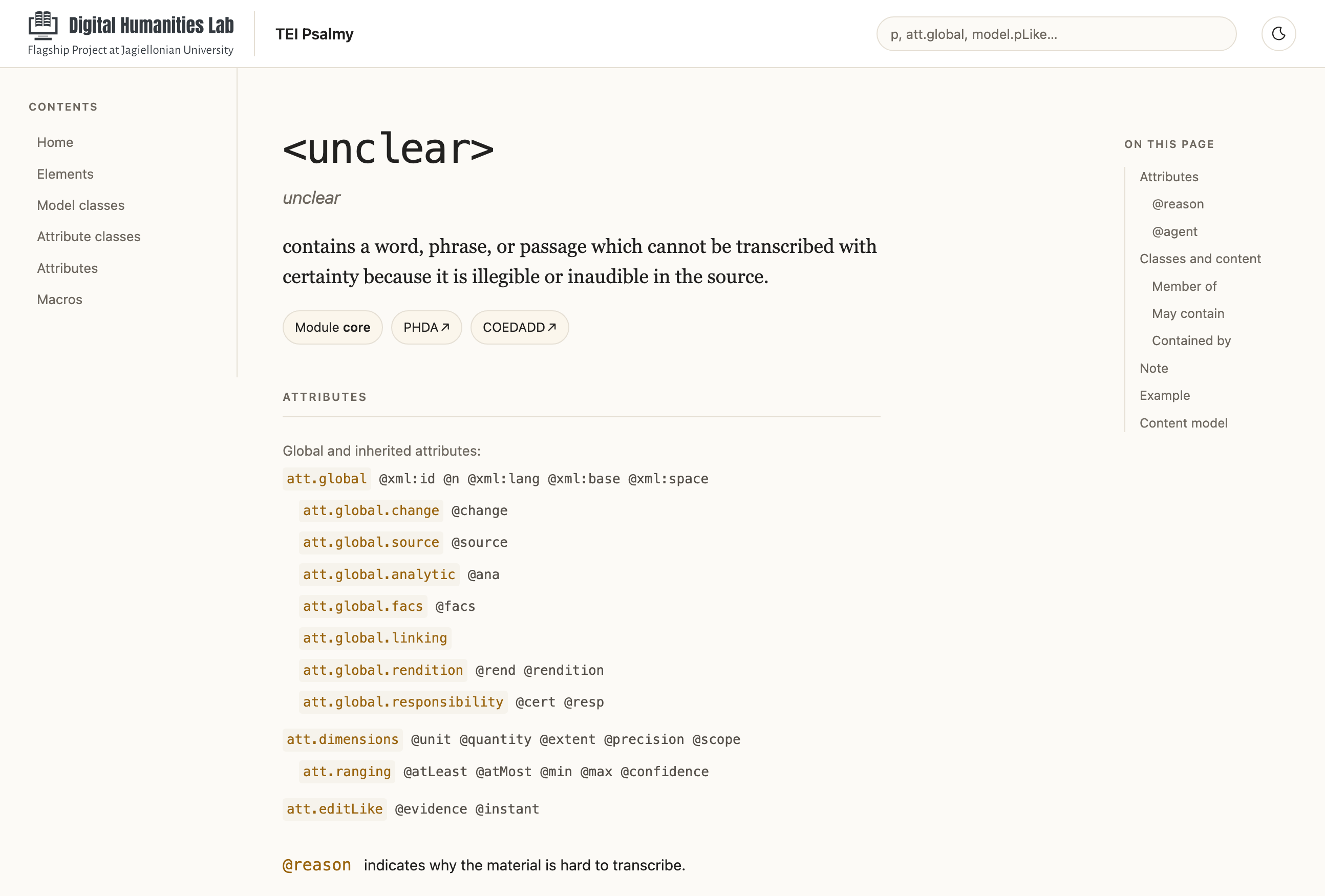
ODD documentation: element reference
The reference page for <unclear>
Why is it not yet 1.0?
0.10 indicates that there still might be breaking changes before the 1.0. In particular this applies to page layouts and templates. However, the core we consider stable and production ready, so give it a go!
Support e-editiones
Remember: e-editiones is a non-profit association under Swiss law, recognised as serving the public benefit, with no commercial interests. As a consequence, we rely on membership to keep maintaining the software. Please consider becoming a member.
Join e-editiones and follow us on Mastodon, LinkedIn, BlueSky and Instagram for updates.